
AutoPartsChecker: https://autopartschecker.com/bulletins/08-048-16/
Fiat service bulletin 08-048-16: EV Won’t Charge After Key-Off
This bulletin updates the Electric Vehicle Control Unit software to address a warning light, charging and shutdown problems, battery temperature control issues, and an inaccurate charging-time estimate. It also improves shifting related to the shift lever position.
Technical service bulletin 08-048-16 applies to the Fiat 500. It was filed with NHTSA 2 times, for different vehicles or with different text: all are below.
A service bulletin (TSB) tells dealers how to diagnose and fix a known issue. Unlike a recall, the repair is usually only free under warranty or a warranty extension. If your vehicle has the symptom, mention bulletin 08-048-16 to your dealer or mechanic.
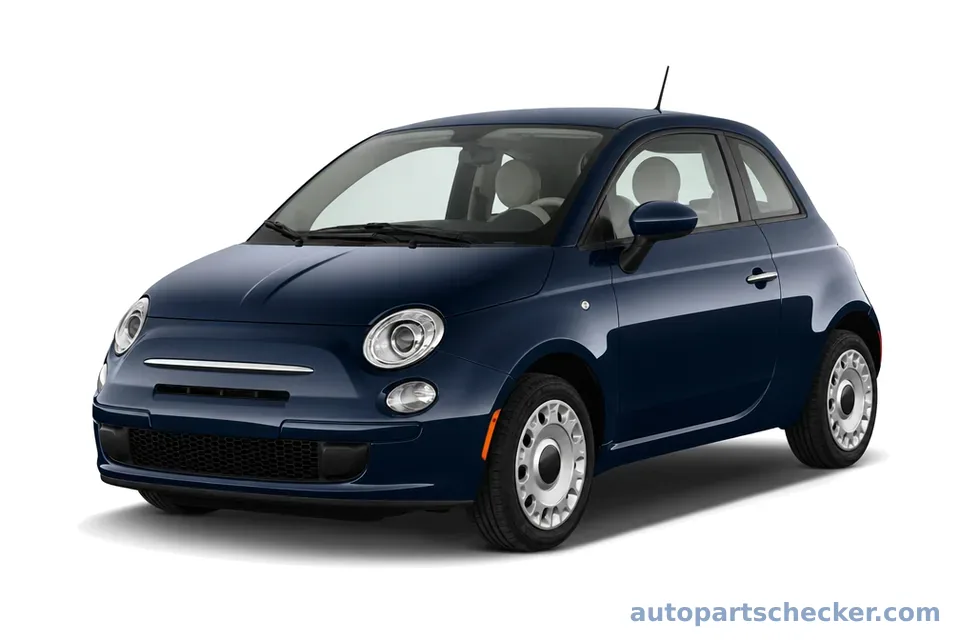
Service bulletin 08-048-16: Electrical system
Issued Apr 2016. NHTSA ID 10076284, 10076505
SUBJECT: FLASH: Electric Vehicle Control Unit (EVCU) System Enhancements OVERVIEW: This bulletin involves updating the software in the EVCU. SYMPTOM/CONDITION: A small number of customers may experience a Malfunction Indicator Lamp (MIL) illumination. Upon further investigation, the technician may find the following Diagnostic Trouble Code (DTC) set in the EVCU memory: · P1A21-00 - HV Battery Contactor Control Sequence Incorrect. In addition the customer may notice one of the following conditions: · When an Electric Vehicle Supply Equipment (EVSE) is plugged in approximately 17 seconds after key off, the vehicle will not charge and will not power down. This could lead to potential 12V battery drain after prolonged period of time. · When the battery temperature is below -30°C (-22°F) and above 50°C (122°F), the thermal system does not function. · When a Level 1 EVSE is plugged in, the displayed charge time estimation for Level 2 is over estimated. The following improvements/enhancements are also included in this software release: · Improved shift strategy involving shift lever position.
In plain English (our summary)
This bulletin updates the Electric Vehicle Control Unit software to address a warning light, charging and shutdown problems, battery temperature control issues, and an inaccurate charging-time estimate. It also improves shifting related to the shift lever position.
- What you may notice: Owners may see a warning light, find that the vehicle will not charge or shut down, experience battery drain or battery temperature control problems, or see an overestimated charging time.
- What is done about it: The repair updates the software in the Electric Vehicle Control Unit.
Our plain-English summary of the official text above. The official text is the record.
Applies to
Service bulletin 08-048-16: Electrical system
Issued Apr 2016. NHTSA ID 10139961
FLASH: Electric Vehicle Control Unit (EVCU) System Enhancements This bulletin involves updating the software in the EVCU. A small number of customers may experience a Malfunction Indicator Lamp (MIL) illumination. Upon further investigation, the technician may find the following Diagnostic Trouble Code (DTC) set in the EVCU memory: · P1A21-00 - HV Battery Contactor Control Sequence Incorrect. In addition the customer may notice one of the following conditions: · When an Electric Vehicle Supply Equipment (EVSE) is plugged in approximately 17 seconds after key off, the vehicle will not charge and will not power down. This could lead to potential 12V battery drain after prolonged period of time. · When the battery temperature is below -30°C (-22°F) and above 50°C (122°F), the thermal system does not function. · When a Level 1 EVSE is plugged in, the displayed charge time estimation for Level 2 is over estimated. The following improvements/enhancements are also included in this software release: · Improved shift strategy involving shift lever position.
Applies to
Source: manufacturer communications filed with NHTSA. Summaries as published by NHTSA. To see the full bulletin, ask a dealer or your mechanic for bulletin 08-048-16.
Updated: Recalls and bulletins updated daily. Complaints through October 29, 2026. Find your vehicle to request alerts