
AutoPartsChecker: https://autopartschecker.com/bulletins/li09-41-n-080666/
Mercedes-Benz, Freightliner service bulletin LI09.41-N-080666: Charge Air System Restriction
Hardened oil deposits can block airflow through the charge air cooler, causing low boost pressure and reduced engine power.
Technical service bulletin LI09.41-N-080666 applies to the Mercedes-Benz Sprinter and Freightliner Sprinter.
A service bulletin (TSB) tells dealers how to diagnose and fix a known issue. Unlike a recall, the repair is usually only free under warranty or a warranty extension. If your vehicle has the symptom, mention bulletin LI09.41-N-080666 to your dealer or mechanic.
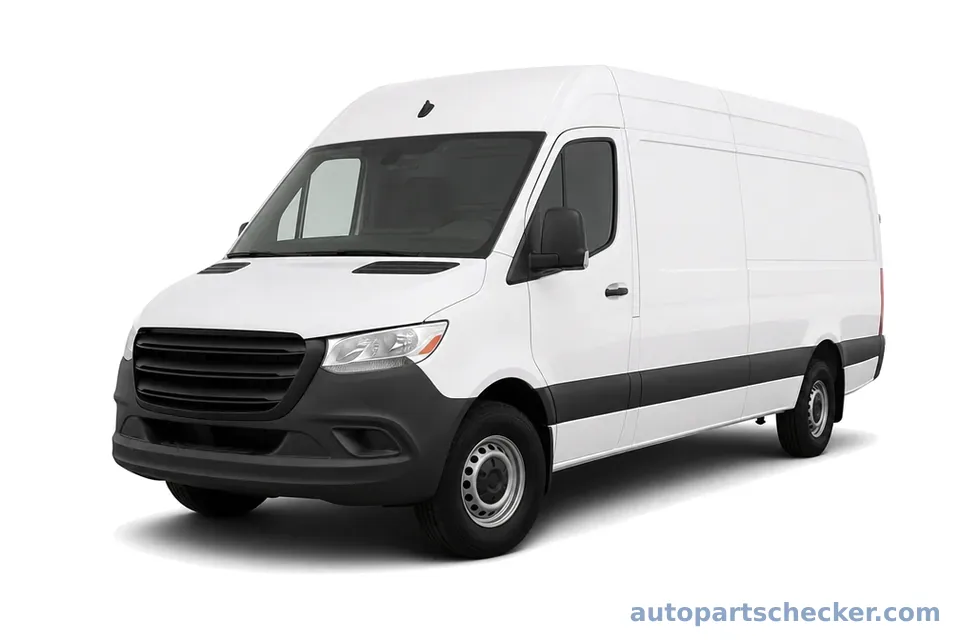
Service bulletin LI09.41-N-080666: Engine
Issued Jun 2026. NHTSA ID 11034415
Check engine light with reduced power –P300A6D due to charge air system contamination Complaint The check engine light is activated, accompanied by fault code 'P300A6D The boost pressure is too low', indicating reduced boost pressure. Cause Charge air system restriction due to contamination: • Oil mist from the crankcase ventilation system can enter the intake tract and deposit within the charge air system • Under high thermal load and with soot-laden or aged engine oil, these deposits may carbonize • Carbonized deposits can loosen and accumulate in the charge air cooler and related components • This can result in partial or complete restriction of the charge air cooler, leading to underboost conditions and fault codes such as P300A6D Contributing factors may include: • High engine load operating profiles • Extended oil service intervals or degraded engine oil condition Remedy Prerequisite: Complete all guided diagnostic test steps for fault code P300A6D in Xentry Diagnostics and follow LI09.40-N-079144 before performing the repairs below. If carbonized oil deposits or restriction are identified within the charge air system: 1. Replace the following components as a set: • Charge air cooler • Exhaust turbocharger • Charge air pipe upstream of the charge air cooler 2. After completing repairs: • Perform engine oil and filter replacement using an approved specification oil. Approved oil specifications: • MB 229.52 SAE 5W-30 - BB00.40-P-0229-52A • MB 229.51 SAE 5W-30 - BB00.40-P-0229-51A 3. Perform control unit adaptations: • Reset intake air system adaptation values • Reset low-pressure exhaust gas recirculation (EGR) adaptation values 4. After repair completion: • Perform a test drive • Verify that the fault code does not return 5. If the vehicle is within warranty and the charge air cooler is determined to be obstructed by debris, use damage code 50301 B2 when submitting the warranty claim. Notes: • Additional component replacement is not required unless supported by further diagnostic results. • Do not replace the charge air distributor pipe or Clean Air Line unless additional faults (for example, air mass-related faults) are present. • After replacement of components, ensure proper initialization and learning procedures are completed in the control unit. • Creation of an XENTRY TIPS case is not required for this condition. • Please review the attached photos for previously identified causes of these fault codes.
In plain English (our summary)
Hardened oil deposits can block airflow through the charge air cooler, causing low boost pressure and reduced engine power.
- What you may notice: The check engine light may come on with reduced engine power.
- What is done about it: After completing the required diagnostic checks, if hardened oil deposits or blockage are found, replace the charge air cooler, turbocharger and pipe upstream of the cooler together, change the engine oil and filter using approved oil, reset the specified control unit learning values, and test-drive to confirm the fault code does not return.
Our plain-English summary of the official text above. The official text is the record.
Applies to
Source: manufacturer communications filed with NHTSA. Summaries as published by NHTSA. To see the full bulletin, ask a dealer or your mechanic for bulletin LI09.41-N-080666.
Updated: Recalls and bulletins updated daily. Complaints through October 29, 2026. Find your vehicle to request alerts