
AutoPartsChecker: https://autopartschecker.com/chevrolet/impala/2003/tail-light-assembly/
2003 Chevrolet Impala: complaints mentioning the tail light assembly
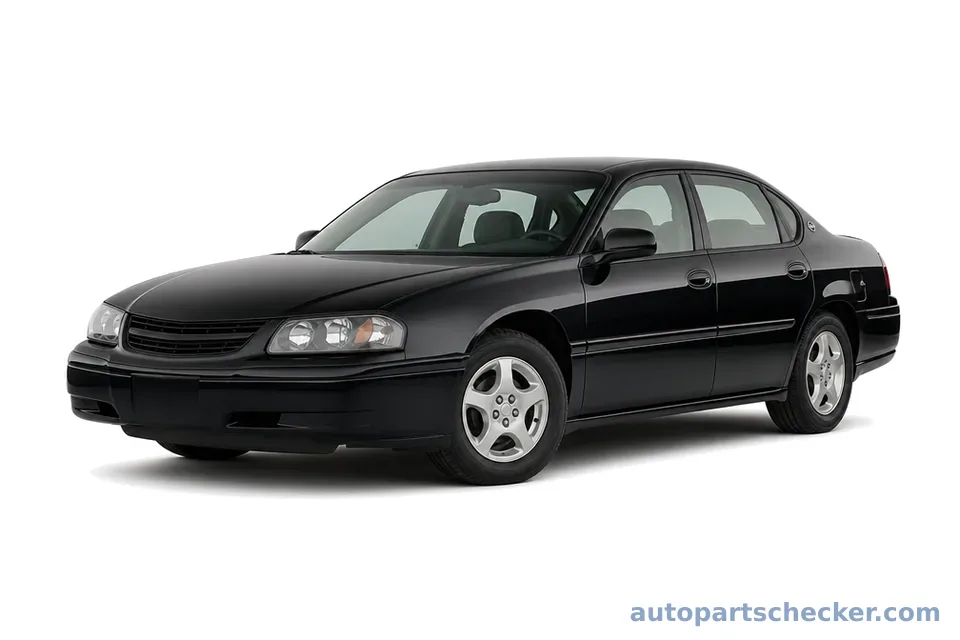
What it does
The rear light unit containing the tail, brake and often turn-signal lights.
Common signs of a problem
- Brake or tail light not working
- Cracked lens or water inside
- Bulb-out warning
What owners report
7 owner complaints to NHTSA mention the tail light assembly on the 2003 Chevrolet Impala, out of 103 complaints about related systems.
Counts are complaints whose text mentions this part. A mention isn't proof the part failed: some complaints mention it in passing, as recently replaced or as working fine. Complaints are unverified owner reports, not confirmed defects.
Tail Light Assembly complaints by model year
Owner complaints mentioning the tail light assembly
-
Reported Dec 2015
Tl* the contact owns a 2003 chevrolet impala. The contact stated that the cruise control activated independently, the headlights and brake lights flickered, and the instrument panel warning lights illuminated intermittently. The contact mentioned that the heater had to be running for the cruise control to deactivate. In addition, the exterior lighting flickered when the engine was not running. The vehicle was taken to a dealer where the failures were undetermined. The vehicle was not repaired. The manufacturer was notified of the failures. The failure mileage was unknown.
-
Reported Oct 2014, 186,300 miles
Tl* the contact stated that 2003 chevrolet impala. The contact stated that the headlights failed to illuminate and the brake light continuous illuminated. The vehicle was taken to an independent mechanic. The technician diagnosed that the dimmer switch need to be replaced. The manufacturer was not made aware of the failure. The failure mileage was 186,300.
-
Reported Sep 2007
Purchased a second chevrolet impala with same defect with tail light compartment. Holds water indefinitely, not just condensation. I now have a 2003 and used to have a 2002 with same problem. Causes light bulbs to go out frequently and also alarm will go off when opening trunk which I suspect maybe a short in wiring due to water. I have contacted a local chevrolet dealer's service dept as well as gm corporate and they are familiar with problem but no with no recalls yet to provide resolution of what I believe is a safey hazard when light bulbs continue to go out. Of course they want me to pay to replace defective taillight assembly that may still have some condensation problems.
-
Reported May 2006, 250 miles
I purchased my chevy impala 2003 brand new in march of 2003. Every since then when I turn on my headlamps, they turn off at random, which is very dangerous on a darkened road at night. Everything goes off (interior, tail lights, ect).
-
Reported Aug 2004, 17,000 miles
The rear tail lights/instrument panel lights were inoperative. Please provide more information.
-
Reported May 2004, 10,000 miles
Power door locks fail with use of keyless remote entry. When testing circuit amperage draw finds a 19 amp electrical spike on a 20 amp circuit. Suspect this to be to high for circuit protection. Fuse blows frequently. When doors are locked headlights and tail lights will flash momentarily which is normal. The circuit load is to high for a twenty amp fuse. Suggest gm to increase circuit protection amperage or decrease amperage draw. Dealer unable to locate problem.
-
Reported Jul 2003
Consumer called complaining about having problems with rear brake lights. Also, the way brake lights were designed was bad. Manufacturer was contacted, and stated that they have not broken any laws, and that their care was safe.
Other parts for the 2003 Chevrolet Impala
Updated: Recalls and bulletins updated daily. Complaints through October 29, 2026. Request alerts for your vehicle