
AutoPartsChecker: https://autopartschecker.com/chrysler/pacifica/2007/alternator/
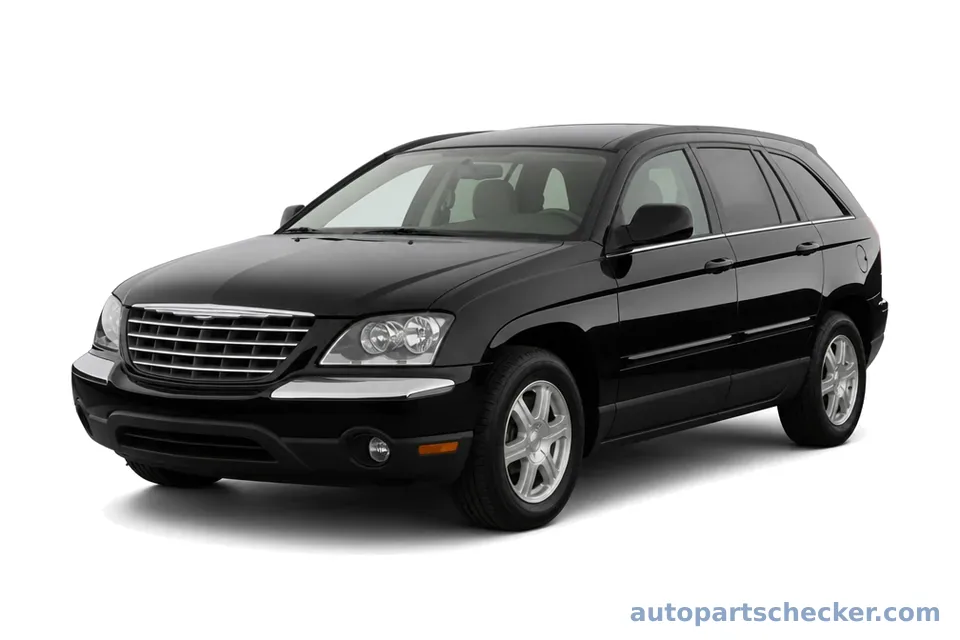
2007 Chrysler Pacifica: complaints mentioning the alternator
What it does
Engine-driven generator that charges the battery and powers the electrical system while the engine runs.
Common signs of a problem
- Battery or charging warning light
- Dimming lights
- Repeated flat battery
What owners report
Owners filed 59 complaints about related systems on the 2007 Chrysler Pacifica; fewer than 5 mention the alternator specifically.
Counts are complaints whose text mentions this part. A mention isn't proof the part failed: some complaints mention it in passing, as recently replaced or as working fine. Complaints are unverified owner reports, not confirmed defects.
Alternator complaints by model year
Owner complaints mentioning the alternator
-
Reported Jun 2016
When u driving the car and come to a stop sign or stop light the car turns completely off and no lights are anything comes on to show that there is a problem. It starts back up but when u go to the next light it cranks back off again. It has not cranked off when u driving a distance yet, but when make a complete stop at a light or stop sign it cranks off again. This has happened at least 50 times since june 22nd. I've tested the battery and the alternator and they are fine but the problem is still happening.
-
Reported Apr 2016
Tl* the contact owns a 2007 chrysler pacifica. While driving at various speeds, the vehicle stalled without warning. It was very hard to steer the vehicle after the failure occurred. The failure occurred intermittently. The vehicle was taken to the dealer where it was diagnosed that the starter, key, engine oil, and alternator failed on separate occasions. The vehicle was repaired each time; however, the failure recurred. The vehicle was not repaired. The manufacturer was notified of the failure. The failure mileage was unknown.
-
Reported Oct 2012, 2,900 miles
2007 chrysler pacifica. Consumer states experience with mechanical problems. The consumer stated at 2,900 miles, a smoke condition developed in the vehicle's engine. A diagnostic revealed the front axle seal was defective. At approximately 3,800, the smoke condition developed again and the consumer was informed that the power transfer unit needed to be replaced. At 25,893, the power transfer unit had to be removed and replaced after it was discovered that there was a leak in an input seal. At 26,906 miles, the engine mount was replaced; at 48,062 miles, the blower motor was replaced; at 48,490 miles, the blend air door of the blower was replaced and the rear axle seals were replaced due to leaks; at 63,852 miles, the pvc valve, fuel pump, egr valve and battery were replaced and a short in the wiring to the alternator was repaired; at 65,479, the vehicle broke down and had to be towed. It was determined the computer needed to be replaced. At 82,439 miles, the motor mount failed and was replaced, an isolater was installed and power transfer unit was leaking again. The consumer took the vehicle back to the dealer, after driving it for 15 minutes, because it was in worse condition than when she left it with the dealer. The engine was racing at 6000 rpms, while driving at 50 mph, there was a loud noise coming from the engine and a banging noise could be heard upon turning the steering wheel. The dealer stated there was nothing wrong with the vehicle. However, when the consumer drove the vehicle for 20 miles, the malfunction indicator light illuminated. The vehicle was taken back to the dealer, and after an inspection, the dealer stated the transmission control module relay was faulty. The consumer was assured the issues were fixed. However, on her way home, the malfunction indicator light illuminated again, the engine was racing and the entire vehicle jolted every time she shifted into, drive, park or reverse. The power door locks failed and the consumer was locked inside the vehicle for several minutes.
-
Reported Oct 2012, 2,900 miles
Fax on behalf of re her 2007 chrysler pacifica experiencing various and significant mechanical failures; reply attn caroline wekselbaum/new york, ny district office the consumer stated at 2,900 miles, a smoke condition developed in the vehicle's engine. A diagnostic revealed the front axle seal was defective. At approximately 3,800, the smoke condition developed again and the consumer was informed that the power transfer unit needed to be replaced. At 25,893, the power transfer unit had to be removed and replaced after it was discovered that there was a leak in an input seal. At 26,906 miles, the engine mount was replaced; at 48,062 miles, the blower motor was replaced; at 48,490 miles, the blend air door of the blower was replaced and the rear axle seals were replaced due to leaks; at 63,852 miles, the pvc valve, fuel pump, egr valve and battery were replaced and a short in the wiring to the alternator was repaired; at 65,479, the vehicle broke down and had to be towed. It was determined the computer needed to be replaced. At 82,439 miles, the motor mount failed and was replaced, an isolater was installed and power transfer unit was leaking again. The consumer took the vehicle back to the dealer, after driving it for 15 minutes, because it was in worse condition than when she left it with the dealer. The engine was racing at 6000 rpms, while driving at 50 mph, there was a loud noise coming from the engine and a banging noise could be heard upon turning the steering wheel. The dealer stated there was nothing wrong with the vehicle. However, when the consumer drove the vehicle for 20 miles, the malfunction indicator light illuminated. The vehicle was taken back to the dealer, and after an inspection, the dealer stated the transmission control module relay was faulty. The consumer was assured the issues were fixed. However, on her way home, the malfunction indicator light illuminated again, the engine was racing and the entire vehicle jolted every time she shifted into, drive, park or reverse. The power
Other parts for the 2007 Chrysler Pacifica
Updated: Recalls and bulletins updated daily. Complaints through October 29, 2026. Request alerts for your vehicle