
AutoPartsChecker: https://autopartschecker.com/dodge/intrepid/2000/headlight-assembly/
2000 Dodge Intrepid: complaints mentioning the headlight assembly
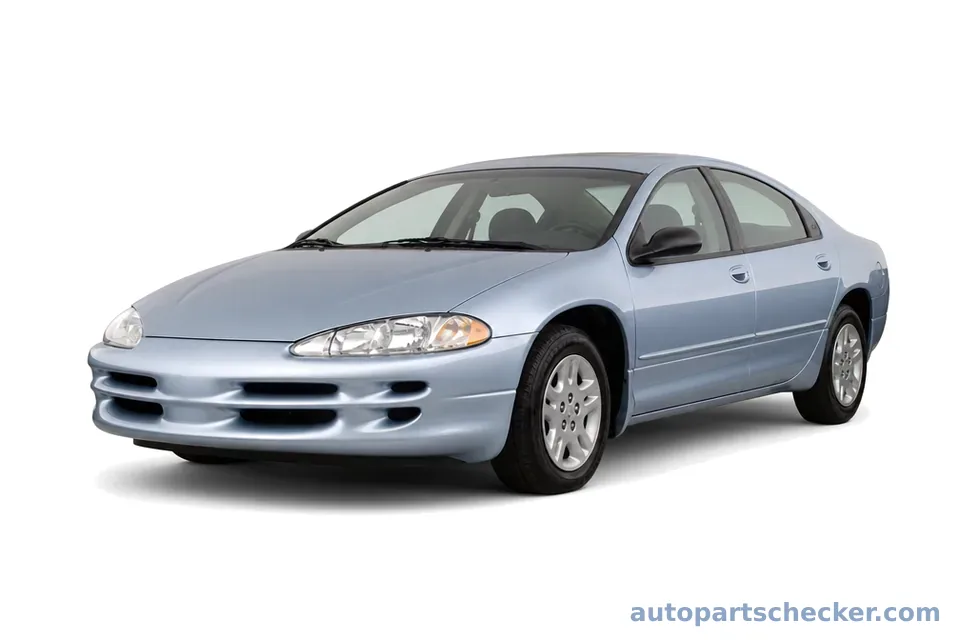
What it does
The complete front light unit: housing, lens, reflector and bulb or LED module.
Common signs of a problem
- Dim or yellowed lens
- Moisture inside the housing
- Light flickering or not working
What owners report
14 owner complaints to NHTSA mention the headlight assembly on the 2000 Dodge Intrepid, out of 15 complaints about related systems.
2 involved a crash, 0 a fire; 3 injuries reported.
Counts are complaints whose text mentions this part. A mention isn't proof the part failed: some complaints mention it in passing, as recently replaced or as working fine. Complaints are unverified owner reports, not confirmed defects.
Headlight Assembly complaints by model year
Owner complaints mentioning the headlight assembly
-
Reported May 2016, 150,000 miles, crash, 1 injured
Car was t-boned on driver side, then propelled into a tree and sideswiped a parked car. Airbags did not deploy. Hood was slightly buckled, driver side was damaged from front to behind rear door. Passenger side was damaged from front headlight/bumper area to rear door.
-
Reported Jun 2009
The headlights have maintained a yellowish tint to them and driving at night is very hard as the lighting is impaired. This has gone on for about 6 years now. The local dealership where purchased has offered to buff and clean them at $100.00. There are cracks in the plastic covers. The car has not been in a crash. Although when we took car for 6000 mile oil change an employee parked the car behind a dodge truck. The owner of the truck chose to leave and backed over the front end of the car. We finally worked out the details and had to replace the hood and fenders at a local body shop and was paid for use of a rental vehicle. The interior and exterior lights have been blinking off and on for about 5 years now. I have taken the car to the dealership on several different occasions to check the wiring, switches, connections, etc, but they are unable to find problem. It doesn't matter if the lights are turned on or turned off-the blinking occurs randomly during the day or night when driving. It's scary at night as other drivers may feel I am flashing my lights at them. Originally when the car was made the rubber covering the door windows was for the stratus so I had to have them replaced. They have not remained in place since them. They are constantly coming off. The dealership wants to charge me for fixing the problem so I have just dealt with it. While car was still under warranty the drivers seat mechanism to adjust for your back failed and would cost me over $800.00 to fix. So I have just let it go. It seems like the extended warranty I purchased rarely covered anything. I would like to have the headlight covers replaced and the entire lighting repaired to prevent a serious accident or death.
-
Reported Apr 2008
The specific reference I have is a 2000 dodge intrepid. The issue is the plastic cover for the headlamps have undergone a material failure?they have a series of micro-structured cracks throughout the entire plastic cover that scatters a significant portion of the light from lamps preventing normal function and good vision for the drivers. Plastics do not crack on their own and this event is not from an accident or other unique event on this car. I have a ph.d. In chemistry from harvard university and my expertise is in micro/nano-technology. This education which is unique has enabled me to investigate the reason of a ?hazy? Headlamp cover. The dealership mis-diagnosed the problem and initially sold a ?costly? ($50 plus labor) cleaner kit. Micro-cracks cannot be fixed but such a method and when I called the dealership back to explain the this was not dirt or a haze but cracks; they admitted they did not look closely at the problem and did not know what to do and suggested calling chrysler directly. I contacted customer service at chrysler who basically ignored my comment, said that they would do nothing about such a claim, and told me since the car was too old I had to pay all expenses out of my pocket. I turn to you because I do not have the resources to see if this is a larger problem; which from my experience with materials believe it has to be. Unlike with brake pads or other consumable/wear-down items in a car, the plastic covers for lights should not fail over time. Since the car still runs and the lights are technically on although the visibility is greatly diminished, they might not realize their safety is at risk with diminished visibility. I also believe that crash investigators do not look at the quality of the plastic covering the headlamps and the possibility of micro-cracks limiting visibility before the accident occurred. Thank you for your time in reading my comments. Sincerely, adam winkleman, ph.d.
-
Reported Aug 2007, 120,000 miles
There was no accident. My cars clear plastic headlight covers have been getting more and more yellow through the years. At night I can barely see the street as the yellowed covers substantially decrease the amount of light the headlights can give off. The cost of replacing the covers is prohibitive for me as you need to replace both assembly's completely. This situation is dangerous and could cause an accident. Maybe you can get chrysler to replace them. I will do the labor but need the new assembly's. Thank you
-
Reported Jan 2007, 30,000 miles
Tl* - the contact stated that in approximately january of 2006 he developed a crusty, foggy film on both head lights of his 2000 dodge intrepid. The failure mileage was approximately 30,000. The contact stated that this inhibits the amount of light. The dealer said this condition came from the heat on the headlights and they have a process to clean the headlights. The contact stated he would have to pay for the repair and does not feel that this is reasonable. . Updated 2/16/2007 -the light output has been reduced by about 50% of the original output and continues to get worse over time.
-
Reported Jan 2006, 60,000 miles
I have 2000 intrepid, the headlights are badly discolored almost as if the lens are melted. I have seen a number of other dodge vehicles with the same problem, intrepid, mini vans etc. This is such a problem that driving without the high beams at night is nearly impossible due to lack of light coming through the defective lens. I also own a 2004 dodge durango that was resently rolled over, the roads were snow covered. I was traveling 15 mph max when the durango slide sideways off the road and the back end started to slide over a small embankment and then rolled over, I do not feel that it was steap enough that the durango should have overturned. Luck is no one was hurt.
-
Reported Dec 2005, 97,554 miles
2000 dodge intrepid. Head lamps. Plastic lens cover is deteriorating and becoming cloudy/translucent. Head light intensity is decreased due to discoloration and fogging. No visible moisture inside lens. Appears to be uv damage to the plastic. Cost per unit is over $300.00. Was told by manufacturer that the vehicle is out of warranty (3 years/36,000 miles) and this is a maintenance item not a safety item. At end of the warranty there was no evidence of this problem. Local dealer said there was nothing they could without direction of manufacturer.
-
Reported Nov 2004, 50,000 miles
There was a yellow substance outside the headlights lens. The dealership was notified.
-
Reported Aug 2004, 42,000 miles
Headlight lenses became discolored. This caused poor visibility when driving at night. Dealer was notified, and informed consumer that the headlight lenses were not covered under a recall.
-
Reported Jun 2004, 23,896 miles
Intermittently the interior lights flashed on and off. When this occurred it obstructed the driver's visibility. Dealership lubricated the headlamp switch controller, but the problem recurred. Dealership indicated that this was a common problem and they were waiting for the manufacturer to send them the repair kit.
-
Reported Dec 2003
The headlights lens developed a milky white color which reduced the lights illumination. This resulted in poor visibility. The entire headlight assembly needs to be replaced to correct the issue. Please provide additional information.
-
Reported Jan 2003, 32,000 miles
When driving at night in fog head light beams projects off a bright light. The light is so bright that it causes the driver to have poor visibility. Ts. Headlight beams project off a bright light. Light beams are reflected up directly in front of vehicle. The light iluminates the fog, and visibility is greatly reduced.
-
Reported Apr 2001, crash, 2 injured
Consumer was in an accident traveling 70mph. Accident damaged right front corner panel, every thing electrical was knocked out, air bags didn't deploy, 2-3 inch crease right underneath left head light. Since accident fuel emissions light has been off and on. Vehicle has been in 5 times since first week in november. Dealer said it was a fuel emissions leak, consumer didn't know how to put on gas cap. After the vehicle was repaired for damages caused by the accident, the ses light came on and the vehicle was serviced four times for the same fuel emissions leaks. Finally, a broken fuel line was found and was fixed.
-
Reported Mar 2000
Tried to open driver window, and it would not go down. When using the switch, you would notice that the headlights would flicker. It is noted as a tsb, but the garage has not been checking on the problems with the vehicle.
Other parts for the 2000 Dodge Intrepid
Updated: Recalls and bulletins updated daily. Complaints through October 29, 2026. Request alerts for your vehicle