
AutoPartsChecker: https://autopartschecker.com/ford/explorer/2000/control-arms/
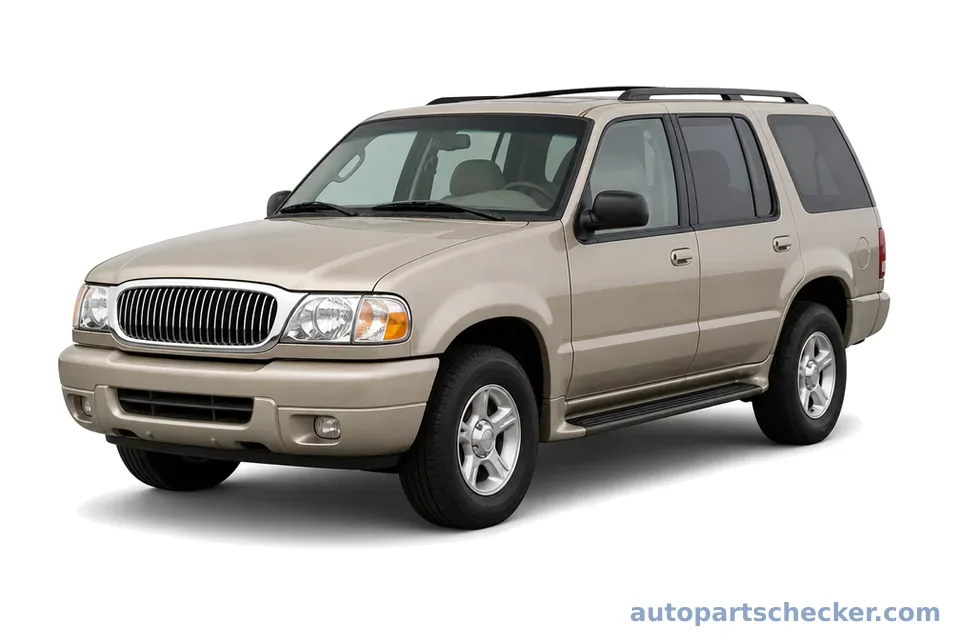
2000 Ford Explorer: complaints mentioning the control arms
What it does
Suspension links that connect the wheel hub to the frame, with bushings and ball joints that allow movement.
Common signs of a problem
- Clunking over bumps
- Wandering or loose steering
- Uneven tire wear
What owners report
18 owner complaints to NHTSA mention the control arms on the 2000 Ford Explorer, out of 69 complaints about related systems.
0 involved a crash, 1 a fire; 0 injuries reported.
Counts are complaints whose text mentions this part. A mention isn't proof the part failed: some complaints mention it in passing, as recently replaced or as working fine. Complaints are unverified owner reports, not confirmed defects.
Control Arms complaints by model year
Owner complaints mentioning the control arms
-
Reported Jun 2011, 192,000 miles
Lower and upper ball joint making terrible noise, I did grease but still have noise.
-
Reported Feb 2008, 84,000 miles
In early september, my transmission locked up while on a trip with my family. The mileage at the time was under 85,000 miles. It cost me over $1500 to have a rebuilt transmission installed. Apparently, other ford explorer xlt owners have had the same issue. In addition, several months later, both wheel hub assembly's have gone bad to the tune of over $800. The mileage is still under 90,000. I had to take the vehicle in again today and found out that a ball joint has gone bad near the wheel hub assembly and it's going to cost around $250 to replace that. It's unfathomable that ford would be allowed to put out such a shoddy vehicle that falls apart once you get over 80,000 miles usage.
-
Reported Feb 2006, 30,000 miles
Dt*: the contact stated while taking the vehicle in for inspection the dealer determined all four ball joints needed to be replaced. The contact was unaware of any problems with the ball joints. Since the replacement no failures have occurred.
-
Reported Jul 2005, 65,000 miles
The upper and lower ball joints only on the driver's side have prematurely worn out. The upper ball joint moves freely with the car's vertical motion rather than being restricted to side-to-side motion. The lower ball joint has also failed. The passenger side shows no such wear. There has been no accident to cause this problem and no accident caused from it-- yet.
-
Reported Jun 2005, 52,000 miles
On a clear, sunny morning in phoenix I was making a turn on the airport exit ramp leading to the 143 at 35-45mph. Suddenly I feel a clunk in the front steering/suspension and my 4 dr, 4x4 2000 explorer oversteers. I struggle to keep the explorer straight and not roll over. I lost control of the steering mechanism for a few seconds before I regain total control. I stop in a emergency lane and visually inspect explorer front suspension/steering. I notice from that point forward that there isn't enough resistence when I steer and that it steers too easily. I bring the car in to the ford dealer on june 16, 2005 and at the end of the day the dealer advises me that the ball joints need to be replaced. The service advisor states that it is common on the explorer to replace ball joints because the explorer wears them out quickly. My explorer only has 52,000 miles and I've had it for almost 5 years. I've read on the internet since this incident that ford explorers have had problems with their ball joints, that they come without a lubrication nipple and that they tend to dry out and deteriorate!!! I feel that this should be a safety recall because I could have gotten killed due to these faulty ball joints. I am an excellent driver and I keep my explorer in tip-top condition. Please act before someone else does lose control and rolls over. I am getting rid of this vehicle as soon as I can.
-
Reported Feb 2005
The ball joints on my vehicle needed to be replaced, but I think other owners should be aware of this issue due to safety concerns. Friends and family members of similar ford vehicle also needed to replace their ball joints, some as early as 40,000 miles. Some mechanics in the area say this is a common issue in ford trucks and suvs, but that many people don't know to have them checked.
-
Reported Feb 2005, 37,126 miles
In march of 2004, I took my 2000 ford explorer xlt for general service, the mechanic found that the front pinion seal, and torque converter seals leaking. The vehicle was taken to the dealer for repairs. Thank the lord that I took out and extended warranty on the vehicle when I purchased it sept, 2002. The repairs where completed, I also took it back to my mechanic to check and make sure the work was done. On 10/26/04 I took the vehicle back in again for work to be done and the mechanic again found the front pinion to be leaking, also found that the upper and lower ball joints were needed and that the power steering pump was chattering. Just some background information: the vehicle was originally owned by my sister, when I purchased the vechicle, she was turning in her 2 year lease. When I took the vehicle over it only had 11,681 miles on it. The first repairs were at 37126 miles, second time miles were 45721 miles. I also have several area's on the vehicle that have rust. I can remeber a few years ago when the 3 major car companies talked about rust not going to be a problem. One of the places with rust is on the radiator support. I just wonder how ford or any of our other us car companies can expect us to keep buying inferior products and pay alot more money.
-
Reported Aug 2004, 19,000 miles, fire
The consumer was driving when she heard a loud noise while turning into her driveway. The vehicle was smoking and caught on fire. The fire was put out with a garden hose. The vehicle was towed to the dealer. The wheel bearings were found to be defective. On the next incident, the consumer took the vehicle to the mechanic to have the front end aligned, when the vehicle was inspected the ball joint fell off into the mechanic's hand july 8, 2004. All of the problems had been on the drivers side. There were also problems with the engine.
-
Reported Mar 2004, 41,500 miles
The ball joints on my 2000 ford explorer need to replaced after only 42,000 miles. It is my understanding ball joints should last a minimum of 100-150,000 miles.
-
Reported Feb 2004, 39,000 miles
I have a 2000 explorer 4wd and lower ball joint on the drivers side is squeeling realy bad. I was told to replace for $400.00. This is just another problem I've had with this suv. The transmission had a bad valve body gasket another $300.00. It's only got 39000 miles. What else can go wrong...sorry that's a bad question. Needless to say I'll be selling this one soon.
-
Reported Nov 2003, 45,800 miles
Dealer service states lower ball joint needs replacement. Experience clunking over bumps. Dealer service already replaced steering rack due to excessive play, somehow are probably related to lower ball joint play.
-
Reported Oct 2003
Problems with front ball joints on 2000 ford explorer. Consumer stated vehicle is only three years old and there should be a recall if there is a problem with the way the ball joints were made on the suv. Consumer feels this could be a safety issue.
-
Reported Sep 2003
While driving at any speed front end made noise . Dealer replaced the upper ball joints,and an independent shop replaced the rotors. But the noise was still occurring.
-
Reported Jul 2003
The vehicle experienced problems with the lower ball joints and smoke emitted from the steering column, the dealer replaced the relay switch. There were problems with the left turn signal indicator. Intermittently without warning when the brakes were fully applied the lights stayed on. When the brake was disengaged, the indicator signaled again, in spite of replacement the problem the continued intermittently, however the dealer stated there was no problem.
-
Reported Jun 2003
Vehicle has always had a pulsating in the brake pedal since about 7000 miles. This time the brake master cylinder failed. Upon inspection by the dealer he stated that I needed to replace brakes, rotors, ( both of which have been replaced at least twice before ) master cylinder, serpentine belt and tensioner and have complete brake system flush. All in the span of 3 years. This vehicle has also had the ball joints replaced and control arms as well. Multiple occurences of the same symptoms.
-
Reported Mar 2003, 46,650 miles
08-14-02 (39685 miles) - replaced idle air control valve - $215.87 03-14-03 (46676 miles) - replaced control arm and ball joints- $770.82 I feel that the above mentioned repairs that were made to my 3 year old vehicle are a result of poor craftsmanship and quality when the vehicle was made, and that these current problems are evidence of "infant mortality". The ford motor company has refused to accept any financial responsibility and did nothing more than receive my complaint.
-
Reported Dec 2001
Vehicle was making a squealing noise. When turning vehicle noise would get louder. Contacted dealer,and dealer stated it was upper control arm. Contacted ford, and ford decided to leave it as an open case. The ball joint and upper control arm on the driver side is what failed.
-
Reported Feb 2001
A loud clanking noise originating from front right suspension area,due to a loose control arm. Cj
Other parts for the 2000 Ford Explorer
Updated: Recalls and bulletins updated daily. Complaints through October 29, 2026. Request alerts for your vehicle