
AutoPartsChecker: https://autopartschecker.com/nissan/maxima/2000/radiator/
2000 Nissan Maxima: complaints mentioning the radiator
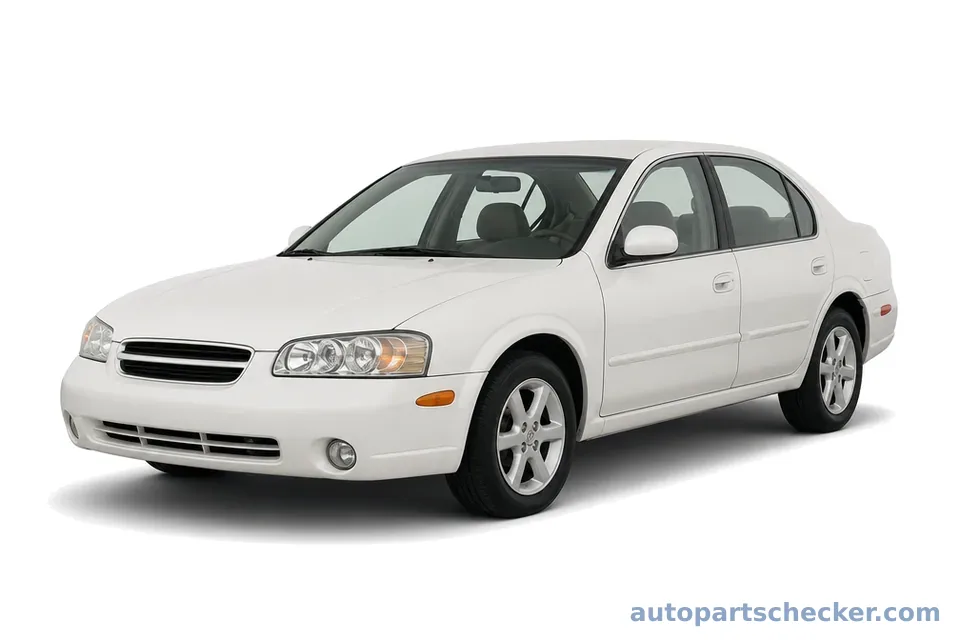
What it does
Heat exchanger at the front of the vehicle that cools the engine coolant.
Common signs of a problem
- Overheating
- Coolant leaks or low coolant
- Sweet smell or steam from the engine bay
What owners report
14 owner complaints to NHTSA mention the radiator on the 2000 Nissan Maxima, out of 72 complaints about related systems.
Counts are complaints whose text mentions this part. A mention isn't proof the part failed: some complaints mention it in passing, as recently replaced or as working fine. Complaints are unverified owner reports, not confirmed defects.
Radiator complaints by model year
Owner complaints mentioning the radiator
-
Reported Nov 2018
The structural support on the bottom of the radiator and the main engine mount is rusted all out now my car is unsafe to drive the car when I was driving was making a noise from the front of the car and then pulled over to discover that the the motor mount was rusted out from the radiator support
-
Reported Aug 2014, 68,000 miles
We own a 2000 nissan maxima se. We have had multiple issues with it. At around 68,000 miles we had to pay around $1000 to replace all of the ignition coil wires on the car because it would stall and quit running. We took it to wallace nissan in kingsport tennessee and had it repaired. They told us then that it was a " known issue" with no official recall from nissan so we would have to cover the full cost out of pocket. Next we have always had these "noises" in the front wheels that they keep telling us is from rusted brake dust shields. Now the car vibrates all over the road, going to a mechanic tomorrow, most likely rack & pinion issue. While under the hood today trying to figure out the steering issue, hubby noticed that the brace that holds the motor & radiator is severely rusted....we've replaced multiple o2 sensors, mass air flow sensors, constant issues with brakes since we've owned this thing... Etc etc nissan has major issues with this car from what I am reading..... What a shame they refuse to fix their mistakes.
-
Reported Feb 2014
The lower radiator support beam is severely corroded in the center where the lower engine mount bracket is bolted. This is also where the hood latch bracket is attached. The remainder of the undercarriage sub-frame components are relatively intact.
-
Reported Feb 2013, 135,000 miles
Tl* the contact owns a 2000 nissan maxima. The contact stated that the vehicle was made a loud banging noise. The vehicle was taken to an independent mechanic. The technician diagnosed that the radiator support was completely corroded preventing the hood of from opening. The manufacturer was not made aware of the failure. The vehicle was not repaired. The failure mileage was 135,000 and the current mileage was 142,000.
-
Reported Jan 2013, 74,000 miles
My previous vehicle was a 2001 subaru outback and there was a recall for the rear subframe rusting. The rust problem on my maxima concerns a component at least as important as the subframe on the subaru. The vehicle has a metal radiator support at the front of the vehicle that runs the width of the car. This radiator support not only holds the radiator up, but is also connected to an engine support in the centre. This radiator support is rusting through right in the centre where the engine support bolts to the rad support. This problem is widespread on the 2000-2003 and the 1995 - 1999 maxima. A google search will reveal the extent of the problem. Imagine the consequences if the rad support should fail and thus, the engine become unsupported while the vehicle is in motion? Whether this is poor metal quality, or a lack of proper rustproofing paint (as it was with the outback) I don't know. There are vehicles out there with minor rust in other major components, but a completely rotted radiator support. I believe some investigation by the nhtsa is warranted. I'm in canada, but this problem is rampant in the us as well.
-
Reported Oct 2012, 127,000 miles
Radiator support on my 2000 nissan maxima is rotted on the bottom center. I found out couple weeks ago, wondering what was the noise that was coming from the front end. While driving on the through way, at 55mph I could see my hood shaking it almost looks like its going fly out which is kinda scary, basically the hood latch that is on the radiator support is loose, because the rod that holds the hood latch is rotted and broke from the lower radiator support, it looks like lower radiator support can brake anytime in half from the center, which would drop the motor down while im on the road. And this I have seen on many maxima of this generation and many maxima owners of this generation of maxima 2000-2003 talk about it.
-
Reported Jul 2012, 80,000 miles
My vehicle, as with many nissan maxima's from 2000 to 2003, is affected by a defective radiator core support. The part is extremely prone to rusting and decaying while the surrounding parts remain intact. The part on my car has developed holes and chunks are constantly falling off, possibly causing a safety hazard.
-
Reported Jul 2012, 108,475 miles
Tl* the contact owns a 2000 nissan maxima. The contact stated that the radiator cross bar was corroded. The vehicle was taken to a local repair shop. And the manufacturer was contacted. The vehicle was repaired. The failure mileage was 108,475 and the current mileage was 108,575. Updated 08/14/12 updated 08/15/12
-
Reported Feb 2012, 94,266 miles
During routine inspection at nissan dealership technician discovered that the stuctural support for the radiator was rotted. The structural support also supports the engine. Dealership informed me that this is very dangerous and requires immediate attention. The structural integrity of the engine mount is compromised. This seems to be a common defect, as I observed at least 5 other similar complaints posted on the nhtsa website. Owners of these vehicles should be notified of this dangerous condition.
-
Reported Feb 2011, 150,000 miles
Tl* the contact owns a 2000 nissan maxima. The contact stated that the vehicle was receiving transmission service when the radiator fractured from the vehicle due to corrosion. The radiator support was repaired. The manufacturer was contacted and advised that there were no recalls for the failure and no further assistance was offered. The failure mileage was 150,000 and the current mileage was 152,000. Updated 03/24/11 updated 05/02/11
-
Reported Dec 2010, 139,072 miles
I recently had my transmission fluid changed (nov. 2010) on my 2000 nissan maxima se and was told that the radiator support is corroded with rust due to very poor quality. I was told by the auto mechanic that this shouldn't be happening and that it was a safety hazard since this could result in the engine or transmission falling out of the vehicle. I was told to file a complaint since this problem is happening with many nissan maximas.
-
Reported Aug 2010, 98,000 miles
I have a model year 2000 nissan maxima. I also owned a 1990 nissan maxima and a 1998 nissan maxima all with the same exact problem. The radiator support rusts out completely and its not due to radiator failure or accident damage. The undercarriage of these cars need to be better protected from the weather or better quality parts need to be used. But specifically the radiator support systems in these maximas are of very poor quality. Failure of these parts would result in the engine and or transmission falling out of the vehicle which is a serious safety issue.
-
Reported Apr 2010, 99,500 miles
The lower radiator support (tie bar) has rusted out to the point that it is affecting the alignment of the vehicle. The rust is concentrated around the place where the lower engine support bolts to the front of the car. It is entirely conceivable that the engine could cause the lower engine support to break free from the lower radiator support. Additionally, the excessive rust on the lower radiator support will significantly reduce the crash performance on this part of the vehicle.
-
Reported Jan 2007, 88,100 miles
Tl* - the contact has a 2000 nissan maxima gxe that had to have the oxygen sensors replaced twice. The radiator was changed in the summer of 2006. The check engine light turned on due to an engine failure, the contact understood that this was a common problem with these types of cars.
Other parts for the 2000 Nissan Maxima
Updated: Recalls and bulletins updated daily. Complaints through October 29, 2026. Request alerts for your vehicle