
AutoPartsChecker: https://autopartschecker.com/dodge/durango/2000/brake-pads/
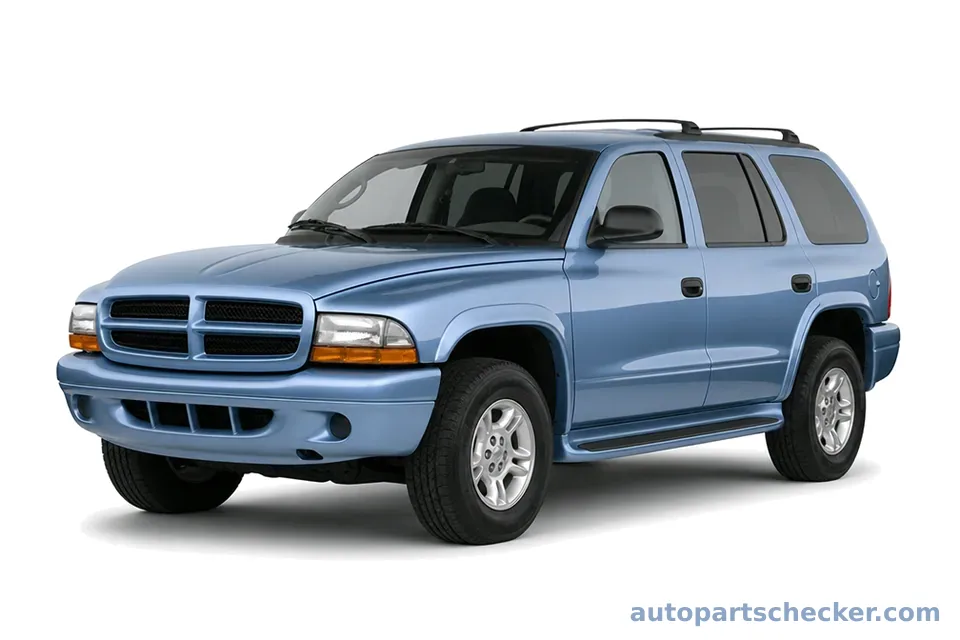
2000 Dodge Durango: complaints mentioning the brake pads
What it does
Friction pads that clamp the brake rotors to slow the wheels. They wear with use and are the most frequently replaced brake part.
Common signs of a problem
- Squealing or grinding when braking
- Longer stopping distances
- Brake warning light or wear indicator
What owners report
7 owner complaints to NHTSA mention the brake pads on the 2000 Dodge Durango, out of 81 complaints about related systems.
1 involved a crash, 0 a fire; 0 injuries reported.
Counts are complaints whose text mentions this part. A mention isn't proof the part failed: some complaints mention it in passing, as recently replaced or as working fine. Complaints are unverified owner reports, not confirmed defects.
Brake Pads complaints by model year
Owner complaints mentioning the brake pads
-
Reported Nov 2005
Brake caliper bolts. This is a 2nd occurrence. I have replaced the front brake pads and rotors on the 2000 durango it was noted that one bolt was missing on the left side and the 2nd was stripped. On the right side one was stripped. On the previous pad replacement one was stripped. The replacement bolts do not appear to have enough thread length to make a secure connection.
-
Reported Dec 2004, 90,000 miles
Front brake pads/rotors were causing the vehicle to pulsate when braking at any speed. Dealership repaired vehicle five times, but the consumer was still having the same problems.
-
Reported Apr 2004, 1,100 miles
I have two: 1: brake rotors are once again out of round/warped suv has 37,000miles on it, used mostly on weekends. Pads have over 90 percent left. First rotors were changed at 20,000 miles (about 1-2 years ago) pads then were still 80 percent left. My other car , driven just as much, does not have this problem. 2- power steering is non-existant when temp is under 32 degrees. After you let the car warm up about 1 min., it starts to work.
-
Reported Feb 2004, 31,800 miles
After feeling a heavy vibration in my brake pedal, I took my 2000 durango in to have the brakes inspected. I was informed that after only 3 years and 31,000 miles, the front rotors were warped beyond repair and needed to be replaced yet my brake pads were still in good condition. The non-dodge dealer mechanic noted that while this was very atypical of standard brake wear, he had service numerous durangos and dakotas with the same problem.
-
Reported Feb 2004, 59,495 miles, crash
My wife was travelling at 65 mph on a clear day, on dry pavement when traffic reduced speed ahead of her. She slowed by gradually applying the brakes. While applying additional brake pedal pressure, the vehicle continued to slow down, but not at a rate sufficient to prevent a collision. The 2000 dodge durango 4x4 is equipped with abs, which did not actuate at any time while attempting to slow. Prior to the collision, the brake pedal was pressing as firmly as possible. The vehicle was taken to a local dodge dealer where the brakes and abs were checked. The initial response was that vehicles with abs do not stop the same as vehicles without abs; if pressure is gradually applied, the anti-lock feature will not activate. The brakes must be released and then applied rapidly to activate the abs. The dealer stated that the abs is operating properly but the front rotors were out of round. The rotors were causing the brakes to grab, causing the abs to activate. The front brake pads were replaced with oem pads, and the front rotors were resurfaced. Following repairs, my wife and I tested the vehicle to determine whether the initial condition of failure could be duplicated. During this test, the abs was activated several times. It should be noted here that the abs had never been activated in the 14 months of ownership prior to this test. I had my wife drive the vehicle to determine whether, under similar 'simulated' conditions, she would activate the abs, under sufficient brake pedal pressure. She was able to activate the abs each time the gradual increase in brake pedal pressure was applied. We believe there is still a reliability question of the abs on the dodge durango and that the vehicle may fail to reduce speed sufficiently to avoid a collision under conditions which should pose no safety concern and we are questioning the safety of continuing to drive our 2000 dodge.
-
Reported Jul 2003
I purchased a used 2000 dodge durango at lee automall, saco, maine, on 03-06-03. I was informed a 150 point check had been performed and the brakes were new on used vehicles on their lot. My first maintenance/oil change was 04/03 at lee automall, auburn, me. I provided a concern that the front brakes had been scwell'g at each slow down or stop and that brake dust was accumulat'g on the tire rims. The brakes were checked and I was informed that they were in excellent condition and that the scwell'g sound I was hearing is normal performance due to a new kind of brake pads that used car dealerships install on used vehicles. 2 days after the front brakes began to scwell again and brake dust was appear'g on the tire rims. 2 wks after svc/maintenance I noticed that each time I drove across a bump or cement bridge the durango would jolt from one side to the other. Whereby, I had a difficult time control'g the steer'g. I brought the durango in for svc/maintenance on 07/09/03 to lee automall in auburn, me for f/u care. I explained to the service rep that the front brakes cont'd to scwell and that the suspension was not perform'g well. I expressed that it was difficult to maintain control of the steer'g each instance that I drove over a bump or cement bridge. I phoned the service rep on 07/10/03 to receive a status on the vehicle. I was told that all 4 shocks (no good), 2 tires (worn-no tread), and a serpetine belt (cracked) had to be replaced. I owned the durango for 3 months and I'm being told that all 4 shocks have to be replaced. I picked the durango up on 07/12/03 and all was well until 07/13/03. The shocks were replaced, two new tires, and the brakes--I was told that the brakes are in excellent condition, a great amount of padd'g remained and that it is just a character flaw. As of 07/15/03 the front brakes continue to scwell, brake dust collects on the rims and I continue to have a difficult time handl'g the steer'g when I drive over a bump or a cement bridge.
-
Reported Oct 2002
Consumer states that since vehicle was at 11000 miles the front brake rotors have needed changing every 12000 miles. Dealer contacted. Tsconsumer states that 90 percent of driving is on the highway. The dealer checked the brake pads and they did not show signs of excessive wear.
Other parts for the 2000 Dodge Durango
Updated: Recalls and bulletins updated daily. Complaints through October 29, 2026. Request alerts for your vehicle