
AutoPartsChecker: https://autopartschecker.com/dodge/durango/2001/brake-pads/
2001 Dodge Durango: complaints mentioning the brake pads
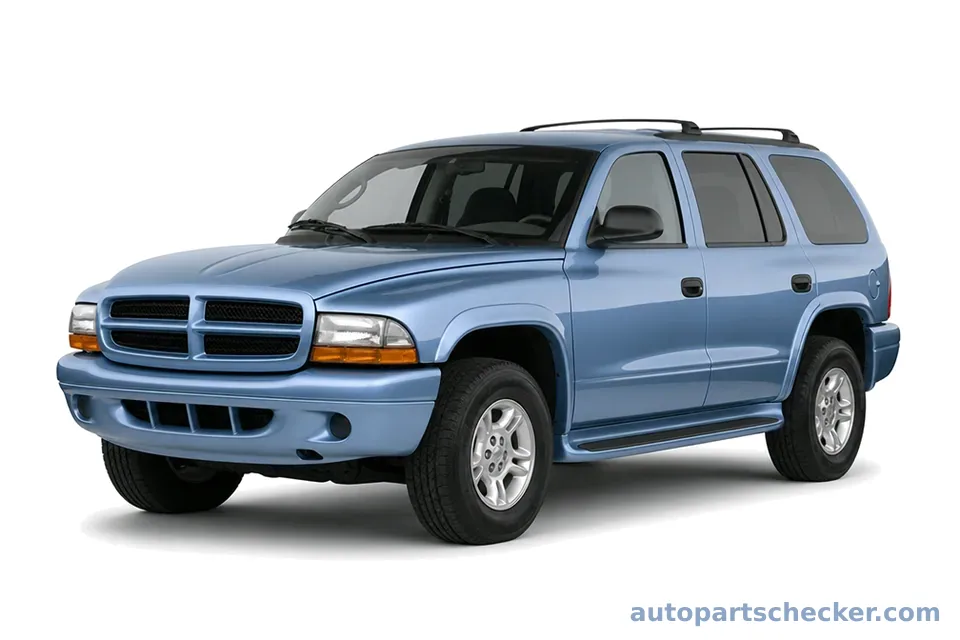
What it does
Friction pads that clamp the brake rotors to slow the wheels. They wear with use and are the most frequently replaced brake part.
Common signs of a problem
- Squealing or grinding when braking
- Longer stopping distances
- Brake warning light or wear indicator
What owners report
12 owner complaints to NHTSA mention the brake pads on the 2001 Dodge Durango, out of 54 complaints about related systems.
0 involved a crash, 1 a fire; 0 injuries reported.
Counts are complaints whose text mentions this part. A mention isn't proof the part failed: some complaints mention it in passing, as recently replaced or as working fine. Complaints are unverified owner reports, not confirmed defects.
Brake Pads complaints by model year
Owner complaints mentioning the brake pads
-
Reported Apr 2005, 43,000 miles
The inboard surface of both brake rotors began to flake off and wear thin. The inboard brake pad retainer clips were bent and rusted or gone. You could feel the pulsation of the untrue rotors when applying the brakes. 43,000 miles on the odometer.
-
Reported Apr 2005, 49,000 miles, fire
I was having problems with my 2001 durango coming to a complete stop when applying the brakes at certain times. I was told by the dealership to replace the brake pads, which I did. The next day, the drivers front wheel started smoking, assuming it was due to the new pads, the truck continued to be driven. A day or two later, it got so bad that the left side caliper seized up and got so hot it started a fire. I then had complete replacement of front roters, calipers and pads. About 6 months later the left side caliper started hanging up and smoking. The rotor, caliper and pads were inspected and found to be in working order. The rotors and pads were cleaned and test driven applying the brakes very hard. After that, things seemed to be working fine. It is now about 6 months later and about a year after the original incident and the left caliper is hanging up again. The brakes on this vehicle have cost me nearly $2,000 up to this point and it looks like it's going to be costing me more $$$ to get it repaired. I have never had such a problem with any vehicle I've ever owned. After my lease is up on my durango, I will never buy another dodge ever again.
-
Reported Dec 2004, 45,000 miles
The steering in my 2001 durango has been very loose and difficult to control especially over rough roads since about 30,000 miles. About a year ago when there was approximately 45,000 miles on it, there started to be very loud noises coming from the front wheels. I took it to the dealership and was told I needed new brake pads but nothing was mentioned about the ball joints. I had a mechanic look at the brakes and was told they were fine, but that the upper and lower ball joints seemed unusually worn. When I heard of the recall december 10, 2004 for the upper ball joints, I took my vehicle in to be checked. They verified that the upper ball joints were "almost gone" and replaced them according to the recall. However, they then informed me that the lower ball joints were just as bad and needed to be replaced "very soon". I asked if the vehicle was still just as unsafe as when I brought it in, and was told "yes". My concern and question then is why are the lower ball joints not included in the recall? Does it not make sense that when one half of a suspension's moving part fails, that it puts undue stress on the opposing part, causing it to fail as well? Also, if the repair of the upper ball joint did not make my vehicle safe, then what is the purpose of the recall?
-
Reported Oct 2004, 55,000 miles
At 55,000 miles I had to replace my rack and pinion and ball joints. I replaced my brake pads and rotors last year and have just been told that I need to replace them again. My vehicle is used for local highway driving.
-
Reported Jun 2004, 34,000 miles
When applying the brakes vehicle pulsated/vibrated. Consumer drove vehicle to the dealer for inspection, and mechanic determined that brake pads and rotors needed to be replaced due to corrosion.
-
Reported Jun 2004, 8,220 miles
My wife and I own a 2001 dodge durango slt. Great car but very dangerous and remarkably obvious design flaw in the front rotors. We currently have 30,000 miles on or durango and I 'm getting ready to put the third set of rotors on the front end. The first changed set was put on after only 9200 miles. Of course at the dealership you get the blah, blah about how it is a normal wear and tear item. Which I agree it is;however, it is not normal today or yesterday for any rotor on any vehicle to warp so badly after only 8000 miles of use. Rotors warp from excessive heat buildup-> that is a fact. I did further research through various dodge dealerships. Of the five respective dealerships contacted all five agreed that the rotors are undersized and are pre-maturely wearing on all dodge durangos, but they couldn't do anything about. When I changed the rotors after only 8000 miles I was fairly surprised to see almost no wear on the front brake pads. Regardless of this small amount of wear I decided to replace the front pads with new high end ceramic pads which help with reducing heat by helping dissipate heat through the ceramic media. At 17,000 miles warped rotors on the front end again, ceramic pads looked great. I do not pull a boat/ rv or anything else on my vehicle. I live in flat corn country not colorado with excessive mountains that would put strain on the braking system. Brakes are the single most important part on any vehicle, and when they are undersized and don't dissipate heat correctly they will warp everytime. There is no doubt that this is a dangerous situation that is not isolated and is prevalent with every 2001 durango. I hope I'm not wasting my fingers time and that this has some impact on dodge, so that they may right this wrong and get recall performed before someone or more people are killed and injured from this condition.
-
Reported Nov 2003
A technician serviced the truck. The technician inspected the brakes and noticed that the brake rotors were fine but the brake pads were pitted. The vehicle has less then 30,000 miles on it.
-
Reported Sep 2003, 30,000 miles
Prior to 30,000 miles the 2001 dodge durango began to shake in the front end. The vehicle was taken back to the dealership where we were told that the brakes pads were like new but the rotors were warped significantly and could not be cut down to stop the shake. We were told that the problem is due to the heat not being able to be released from the brakes in the durango. This is our second durango and we did not experience such a problem with the first one. By reading articles and complaints by other dodge durango and dakota owners, this seems to be an all too common problem. It is my understanding that this repair/service is not covered under warranty. It is my belief that the problem resides with defective rotors put on these vehicles and these vehicles should be recalled for this problem due to the unsafe nature in which these brakes systems are wearing.
-
Reported Sep 2003, 28 miles
The brake system on my 2001 durango consistently has given me problems even after two changes on the pads. My durango only has 30,000 miles on it and I keep it up to date according to the manufacture. The paint job on the vehicle which was brand new has faded near the fender walls and the door jams. I love this vehicle but am disappointed with the quality of the most important things in a vehicle; overall appearance.
-
Reported Sep 2003, 35,000 miles
The brakes are ineffective when going from light braking to heavy braking for a panic stop without fully releasing the pedal first. The brakes will not grab enough for the abs to engage and give the impression that they have glazed over, despite full body weight on break pedal. The front pads have been changed twice, the rotors turned and brake fluid bleed. The condition can be repeated with both cold and hot brakes by slowing the vehicle down from 60 mph to 40 mph in 4-5 seconds then, without releasing the pedal, immediately attempt a full stop. Symptom was demonstrated for dodge dealer service technician. They contacted dodge star for support and was informed that this is a normal operating characteristic of the braking system due to pressure equalization in the master cylinder . I have notified daimlerchrysler (file # 11617536) of my concern and am filing this complaint to bring larger attention to this potentially deadly condition. Considering this engineering design, how safe is this 2.5 ton vehicle when fully loaded to 6400 gvwr or when towing?
-
Reported May 2003, 7 miles
When the brakes were depressed suddenly or hard they would not hold and the vehicle would skid. The abs drums were warped but the pads were not worn per the dealership..
-
Reported Sep 2002
Consumer states, vehicle will vibrate when applying the brakes. Dealer was notified and replaced the front pads twice. Consumer believes, the rotors are the problem.
Other parts for the 2001 Dodge Durango
Updated: Recalls and bulletins updated daily. Complaints through October 29, 2026. Request alerts for your vehicle